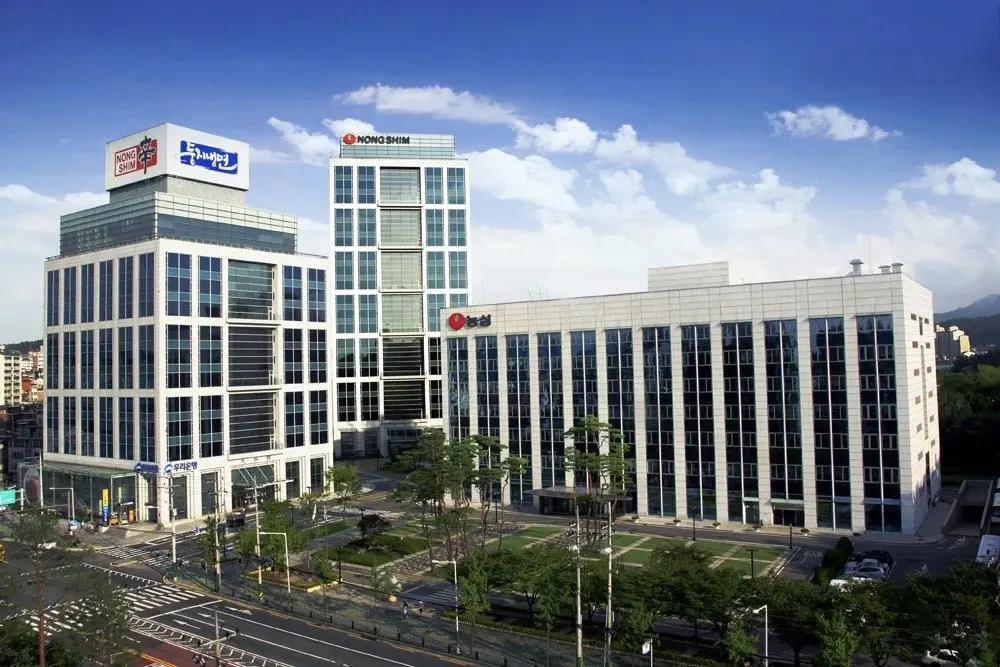
This brief introduces Nongshim as a new client and gives the marketing team a working understanding of the business, its markets, its brand, and the places where our work can add value. It covers who the client is and what they sell, how and where they make money, who they compete with, and the strategic priorities that should shape any campaign or creative we propose. It is built from current public sources, all paraphrased, with figures current to June 2026 and key facts cited so the team can verify and dig deeper.
01
Executive Summary
Our new client, Nongshim, is the company behind Shin Ramyun and South Korea's largest instant noodle and snack maker. It enters 2026 as the leader at home and a clear beneficiary of the global K-food wave, yet its next phase of growth now depends on markets outside Korea rather than inside it. That is the headline for the team to hold onto.
KRW 3.51T
FY2025 consolidated revenue, up 2.2% year over year12
+12.8%
FY2025 operating profit growth, to KRW 183.9B1
~56%
South Korea instant noodle share, 20245
#2
United States instant noodle position, behind Toyo Suisan6
37 → 61%
Overseas sales ratio, FY2024 actual to 2030 target1920
US$1.4B
Korean ramyun exports to Nov 2025, a national record8
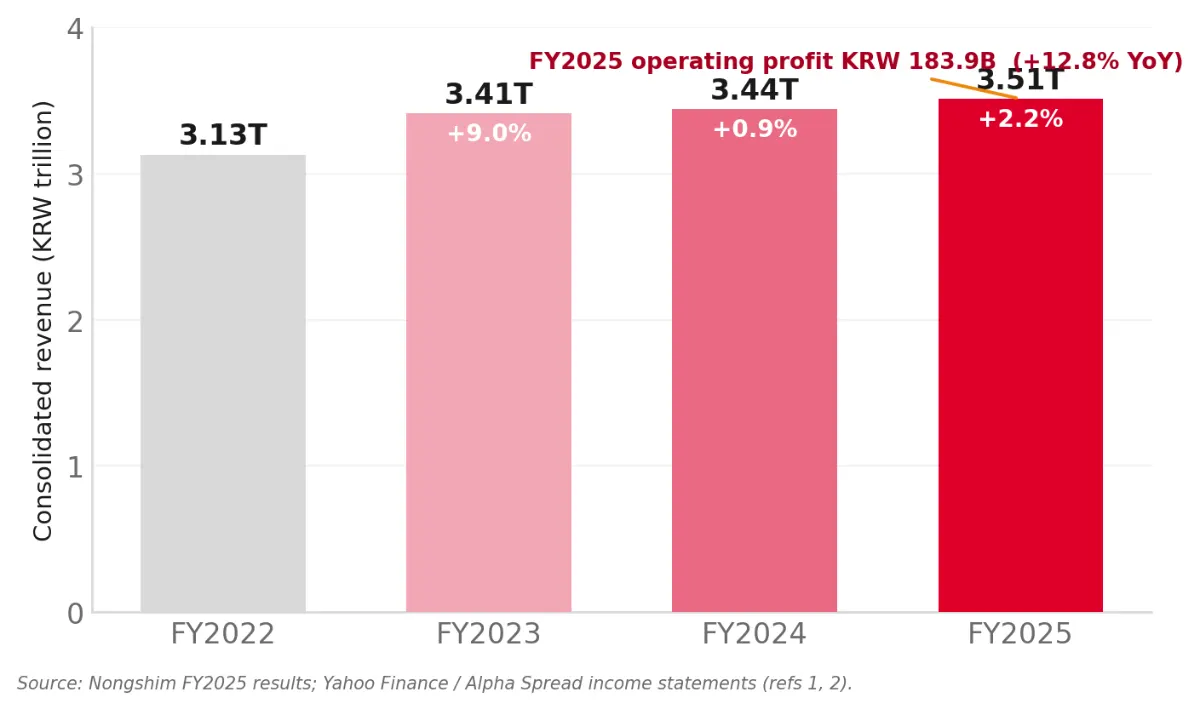
The headline picture is steady top line growth with stronger profitability. Revenue rose from KRW 3.44 trillion in 2024 to KRW 3.51 trillion in 2025, while operating profit climbed almost 13 percent, driven mainly by overseas subsidiaries in China and Japan even as domestic demand softened.18 The strategic conclusion is direct. Korea is a defend and optimize market. The United States, Europe, and selected emerging markets are the build and win markets.
A competitive wake up call sharpens the case. In 2024 Samyang Foods, carried by its viral Buldak line, overtook Nongshim in overseas sales for the first time, ending a long run as Korea's top ramen exporter. Management has responded by targeting a rise in the overseas sales ratio from about 37 percent in 2024 to 61 percent by 2030, inside a 2030 revenue goal of roughly KRW 7 trillion.1920
What this means for our team
Index our work on international markets, the United States, Europe, and emerging markets, rather than domestic Korea, since that is where the client is putting its growth.91011
Support the move upmarket. Positioning and creative should reinforce premium and health led ranges and help shed the cheap food image.8
Lean into culture led marketing. K-pop and film and television tie ins are a proven lane for this brand and a natural home for our ideas.813
Frame the competitive job to be done as closing the United States gap to Toyo Suisan while answering Samyang's overseas surge.61220
02
Company at a Glance
Nongshim is South Korea's largest instant noodle and snack company and one of the most recognizable food brands in Asia. Founded in 1965, the company built its position on two products that became cultural staples, Shrimp Crackers and Shin Ramyun, and has since grown into a multinational operating across more than 100 countries with production in Korea, the United States, and China.9 The operating model is vertically integrated, combining in house product development, owned manufacturing, and a controlled distribution network.
The company frames its purpose around bringing Korean flavor to a global audience while broadening into healthier and more sustainable food. Its current brand line, Lovely Life Lovely Food, adopted in 2020, signals a shift from noodles alone toward lifestyle and wellbeing.17 The internal vision remains leadership of the global food category through innovation and quality.
Core values for readers new to the business
Innovation first, expressed through a continuous pipeline of new flavors and formats.
Cultural pride, using Korean cuisine as the brand's point of difference abroad.
Quality and food safety, managed under HACCP and ISO standards across plants.9
Community and sustainability, increasingly central to license to operate.
Heritage at a glance
1965
Founded as Lotte Industrial Company.
1971
Shrimp Crackers launch, Korea's first major commercial snack.
1978
Renamed Nongshim Co., Ltd.
1986
Shin Ramyun debuts and becomes the flagship.
2005
First United States plant opens in California.9
2020
Record global sales during the pandemic demand surge.
2022
Second United States plant opens, lifting capacity sharply.10
2026
Busan Noksan export hub due to begin operations.11
03
Financial Performance
FY2025 delivered modest revenue growth and a stronger profit profile. Consolidated revenue reached KRW 3.51 trillion, an increase of 2.2 percent over the prior year, while operating profit rose 12.8 percent to KRW 183.9 billion.12 Margin expansion mattered more than volume this year. The growth came disproportionately from overseas subsidiaries, with China and Japan offsetting a soft domestic backdrop.8
Figure 2. Consolidated revenue, FY2022 to FY2025, with FY2025 operating profit highlighted.
Data correction. The September 2024 draft reported annual revenue of KRW 2.5 trillion and net profit of KRW 200 billion. Those figures reflect an earlier period and understate current scale. FY2025 consolidated revenue was KRW 3.51 trillion.12 All financial references in this edition use FY2025 actuals.
Revenue mix
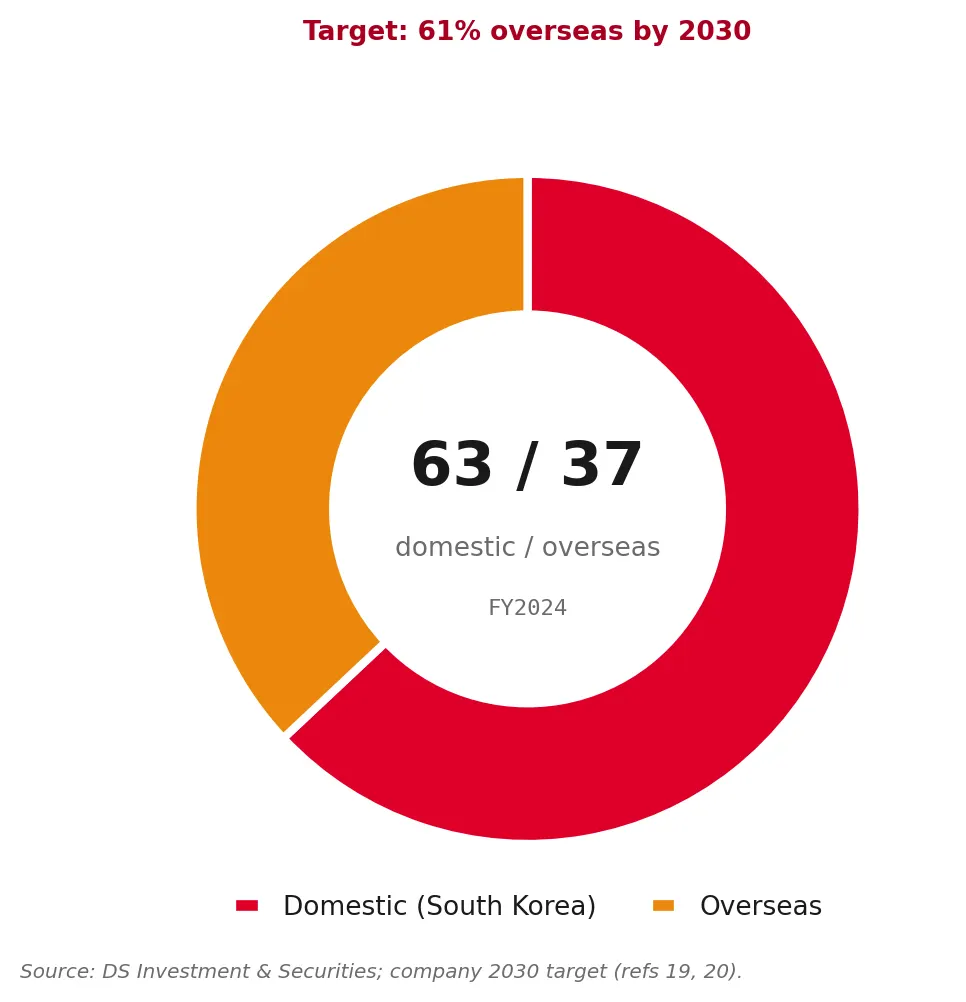
Overseas accounted for about 37 percent of sales in 2024, with domestic providing the rest.19 Management has set a target to lift the overseas share to 61 percent by 2030, which is why capacity investment is now concentrated outside the home market.1920
Figure 3. Revenue split, FY2024, with the 2030 overseas target.1920
Overseas momentum
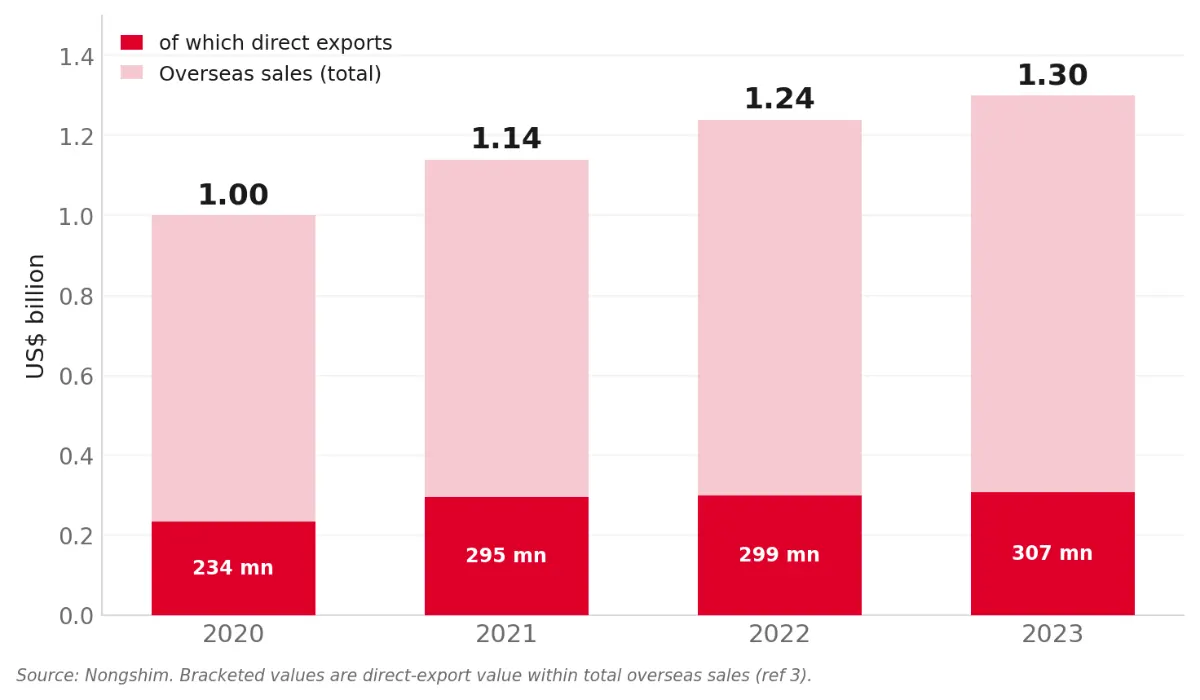
Overseas instant noodle sales have risen steadily, supported by the post pandemic appetite for Korean food and added United States capacity.312 Korean ramyun exports nationally reached USD 1.3 billion in 2024 and USD 1.4 billion by November 2025.8
Figure 4. Overseas sales, with direct-export value shown in red.3
04
Market Position & Competition
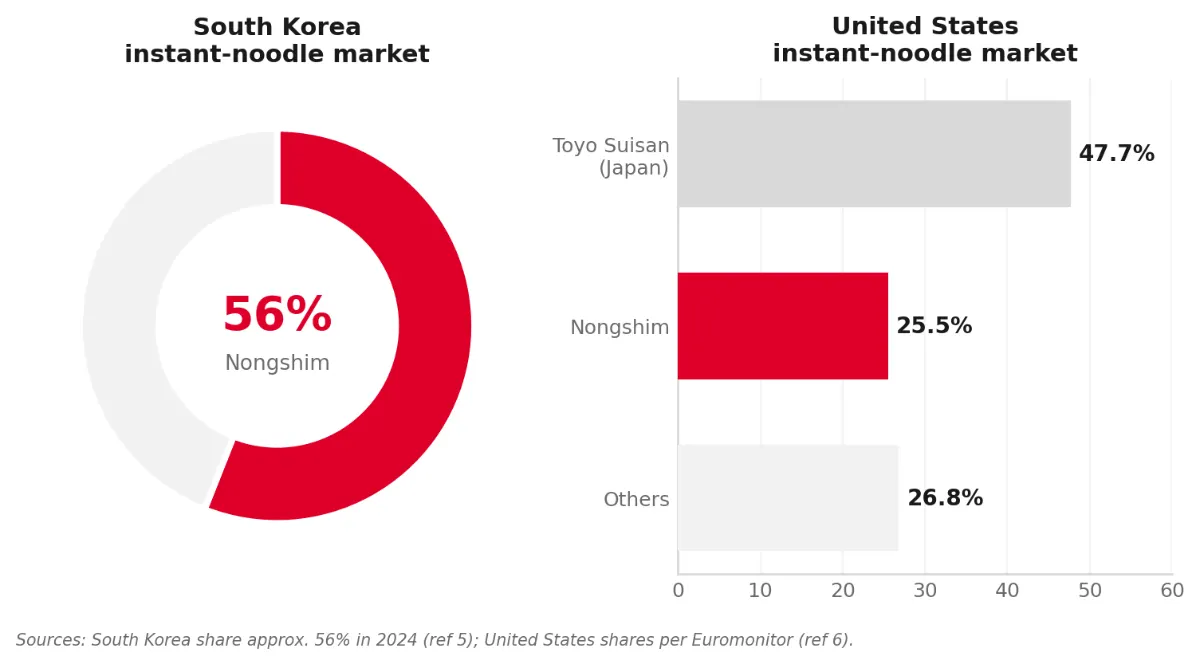
Nongshim holds two very different competitive positions. At home it is the dominant leader with roughly 56 percent of the instant noodle market.5 In the United States it sits second with about a quarter of the market, behind Japan's Toyo Suisan, which holds close to half.6 The clearest single growth objective for the company is to close that United States gap.
Figure 5. Instant noodle market share. Left, South Korea (Nongshim ~56%, 2024).5 Right, United States, per Euromonitor.6
The category is large and still growing
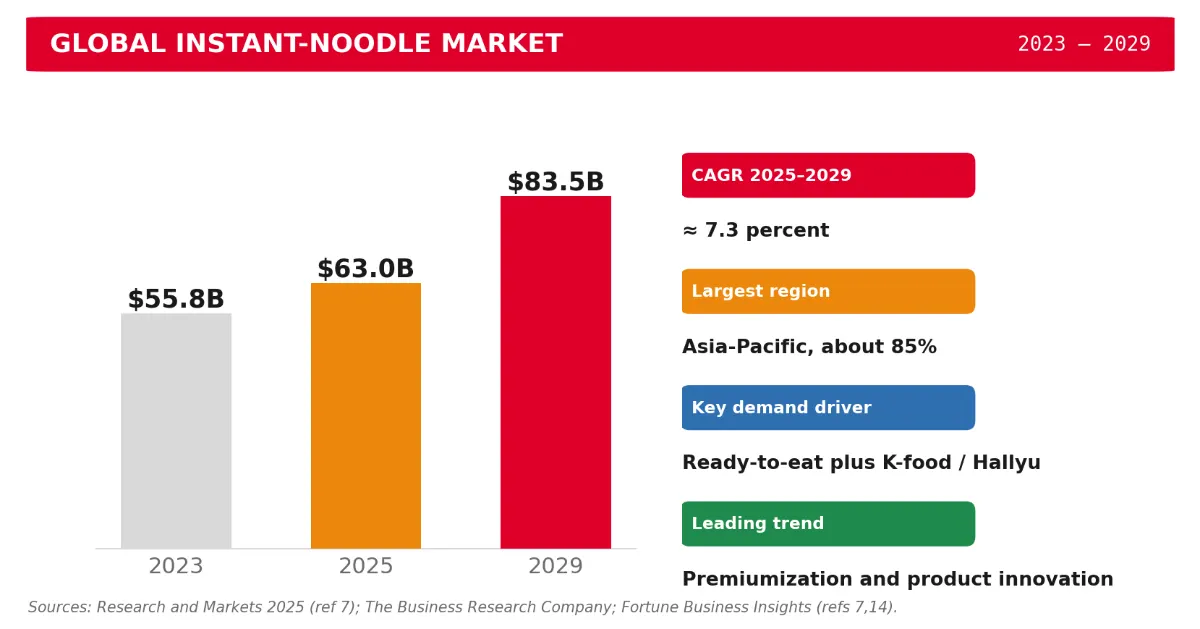
The global instant noodle market was worth roughly USD 63 billion in 2025 and is forecast to reach about USD 83 billion by 2029 at a compound rate near 7 percent, with more bullish estimates putting it close to USD 100 billion by 2030.78 Asia Pacific remains the dominant region, but the fastest brand building opportunities for Nongshim sit in Western markets where Korean noodles have moved from niche to mainstream.14
Figure 6. Global instant noodle market, size and key dynamics.714 Upside case approaches US$100B by 2030.8
A direct competitive challenge
The sharpest development is at home. In 2024 Samyang Foods, powered by its viral Buldak line, overtook Nongshim in overseas sales for the first time, ending Nongshim's long standing position as Korea's top ramen exporter. Across the first three quarters of 2025 Nongshim's overseas sales were about KRW 1.03 trillion against Samyang's KRW 1.37 trillion.20 Trade policy adds pressure, since a 15 percent United States tariff on Korean noodles has already weighed on shipment growth.20 The strategic response is the export factory, the new product lines, and the marketing push detailed in section 5.
Competitive set
Competitor
Base
Position versus Nongshim
Toyo Suisan (Maruchan)
Japan
United States market leader at roughly 48 percent; the primary barrier to a number one position.6
Nissin
Japan
Global scale incumbent across cup and packet formats; strong in the West.14
Samyang (Buldak)
Korea
Overtook Nongshim in overseas sales in 2024 on viral Buldak demand; overseas now about 81 percent of its revenue.20
Ottogi
Korea
Domestic rival using celebrity led marketing to defend share at home.8
05
Growth Engines for 2026
Four engines should carry growth in 2026. They are global manufacturing and market expansion, premiumization, the health and plant based platform, and culture led marketing. Each is already in motion and each needs sharper resourcing.
5.1 Global manufacturing and market expansion
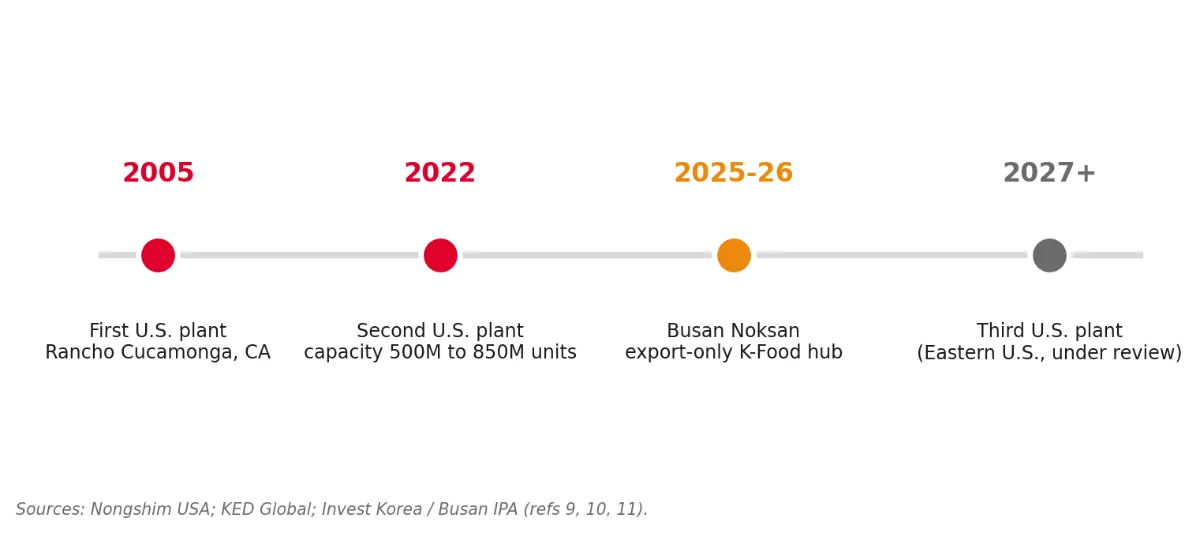
Capacity is the gating factor for international growth. The second United States plant in Rancho Cucamonga, opened in 2022, lifted North American capacity from 500 million to 850 million units and unlocked roughly 40 percent annual sales growth in its first phase.10 A new export only hub at Busan Noksan, due to begin full operations in the second half of 2026, is designed to supply Europe, Southeast Asia, and other distant markets from Korea.11 A third United States plant in the eastern United States remains under review, with timing sensitive to construction and labor costs.10
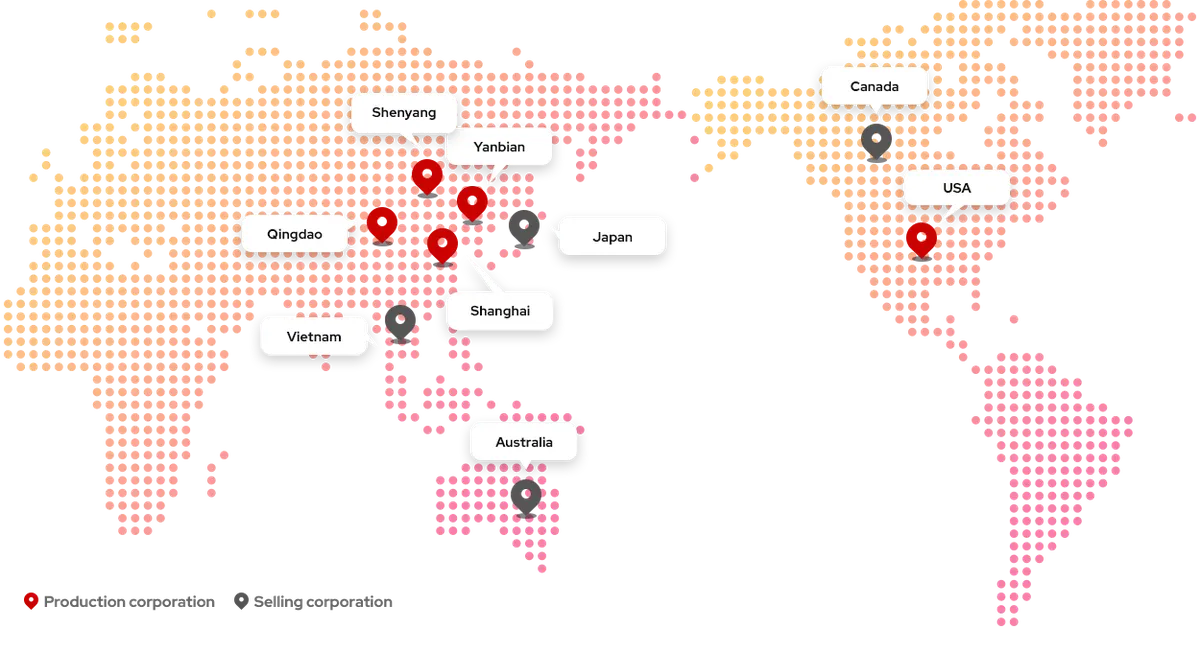
Figure 7. Global footprint. Red markers are production corporations, grey markers are selling corporations. Company-provided map.Figure 8. Manufacturing expansion pipeline.91011
New growth markets targeted, including Brazil, Mexico, India20
On the demand side, the company established a European sales subsidiary in early 2025 to coordinate marketing across the United Kingdom, Germany, France, and the Nordics, and is targeting Southern European entry in Spain and Italy.1112 It is building export focused products around the flagship, including Shin Ramyun Toomba in 2024 and Shin Ramyun Kimchi Stir-Fried Noodles in 2025, both tuned to overseas palates.20 Mexico, Brazil, India, the Middle East, and Oceania are named next horizons.1120
5.2 Premiumization
Korean instant noodles are shedding their cheap food reputation, and Nongshim is using that shift to lift price and margin.8 Shin Ramyun Black anchors the premium tier, and in early 2026 the company launched Shin Ramyun Gold with a chicken based broth to mark the flagship's fortieth anniversary.8 The strategic value of premiumization is margin protection at a time when wheat and palm oil costs remain volatile.
5.3 Health and plant based platform
Health is now a portfolio pillar rather than a niche. The company sells a fully plant based Shin Ramyun and the Vegan Society certified Soon Veggie Ramyun, alongside low sodium variants.18 Beyond noodles, the Veggie Garden brand offers plant based meat alternatives, sauces, and the first Korean vegan cheese, and the Forest Kitchen restaurant in Seoul has become a credibility platform for the plant based agenda, drawing a majority of foreign visitors.15 This platform answers the category's most persistent criticism, sodium and processed content, while opening a younger and more values driven consumer base.
5.4 Culture led marketing
The Hallyu wave remains Nongshim's most efficient awareness driver abroad. Chapagetti became globally famous through the film Parasite, and that playbook is now deliberate rather than accidental.14 The girl group aespa is Shin Ramyun's first overseas brand ambassador and is promoting the export focused Shin Ramyun Toomba, and in 2025 the company launched product tie ins with a major Netflix animated release and its fictional K-pop group.81320 The recommendation is to treat entertainment partnerships as a standing capability with a dedicated budget, not as opportunistic campaigns.
06
Brand & Identity
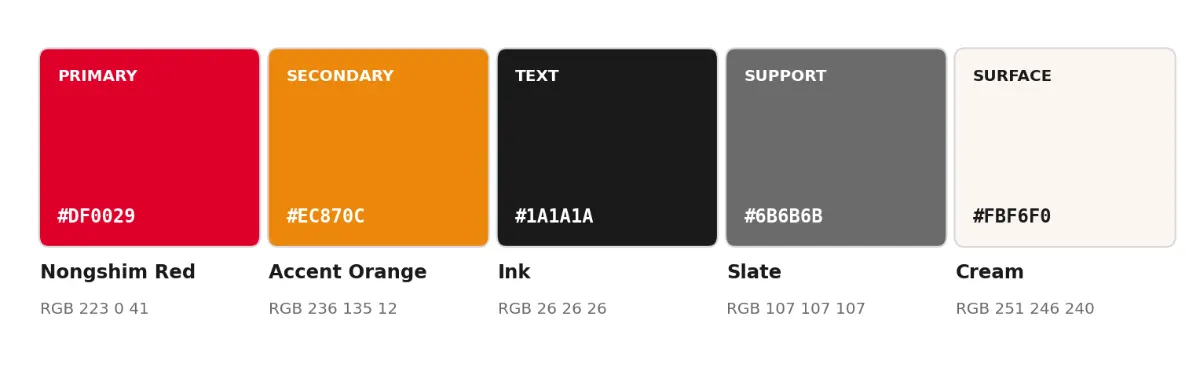
The brand rests on a simple emblem and a single dominant color. The corporate mark, known as the Nongshim Seed, uses two ellipses to express agility and growth, and was introduced in 1991.17 Red is the company's primary color, chosen to signal the benefits of bright and abundant nature and the sincerity of the people behind the products.17
Figure 9. Working color system. Nongshim Red is primary; orange is the supporting accent.17
Color
Primary, Nongshim Red, hex DF0029.17
Accent, Orange, hex EC870C, for warmth and appetite.17
Neutrals, Ink and Slate for text, Cream for surfaces.
Voice
Confident, warm, and food forward. The current line, Lovely Life Lovely Food, frames products as part of a fuller life.17
Typography in this document
Archivo for display and headings, a strong grotesque that mirrors the bold sans of the corporate identity.
Inter for body text, chosen for clarity at small sizes.
Space Mono for data labels and eyebrows, giving an evidence led feel.
This pairing is a practical, license friendly stand in for the proprietary fonts named in the official identity manual.17
07
Product Portfolio
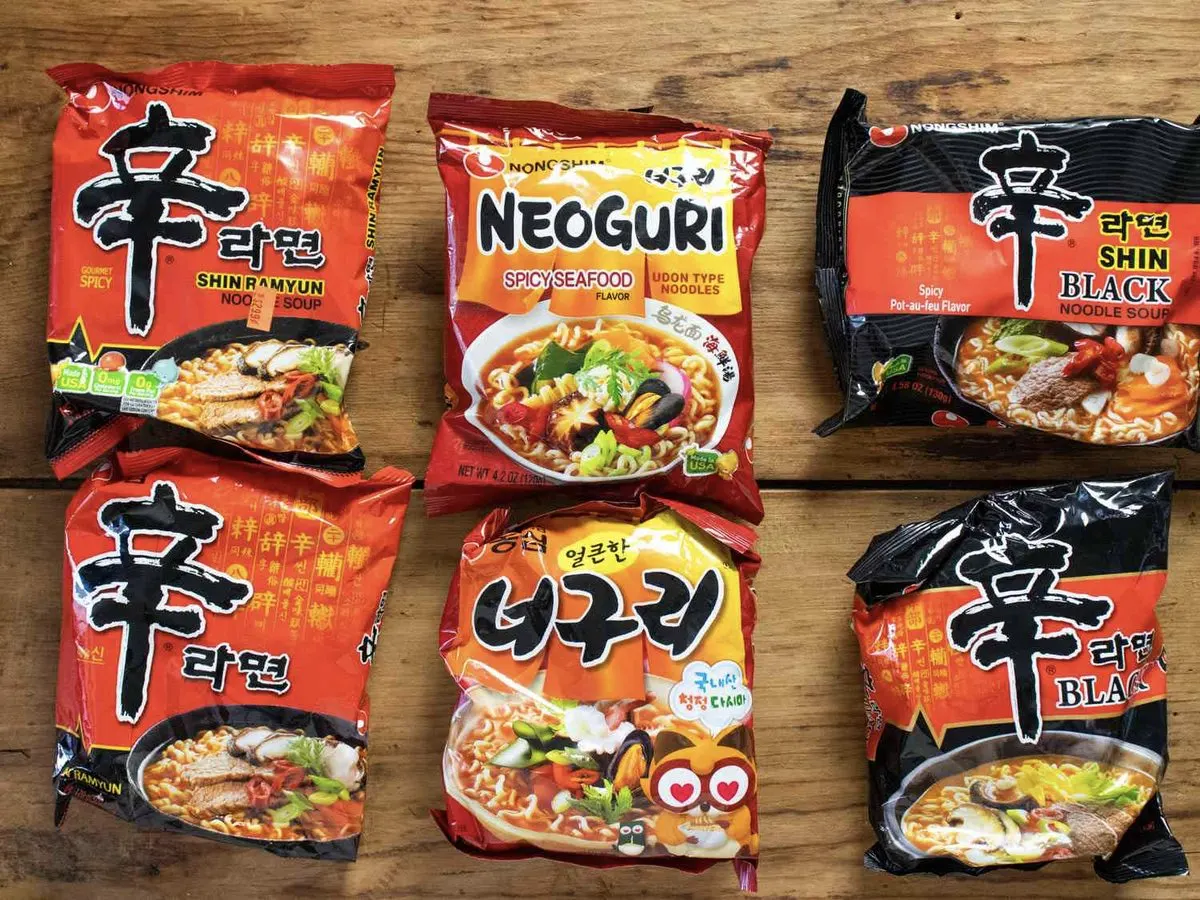
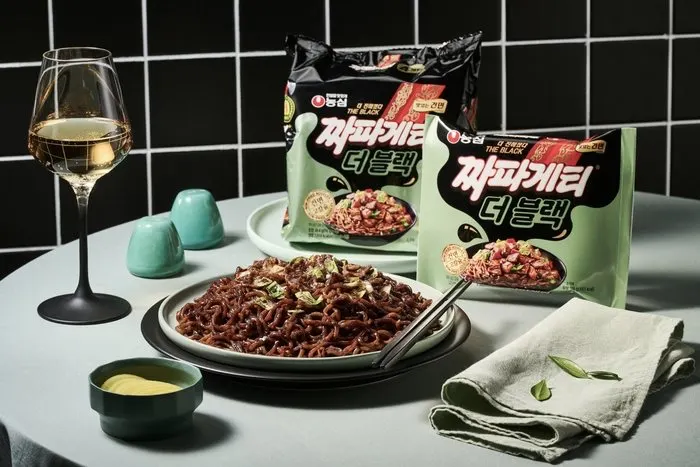
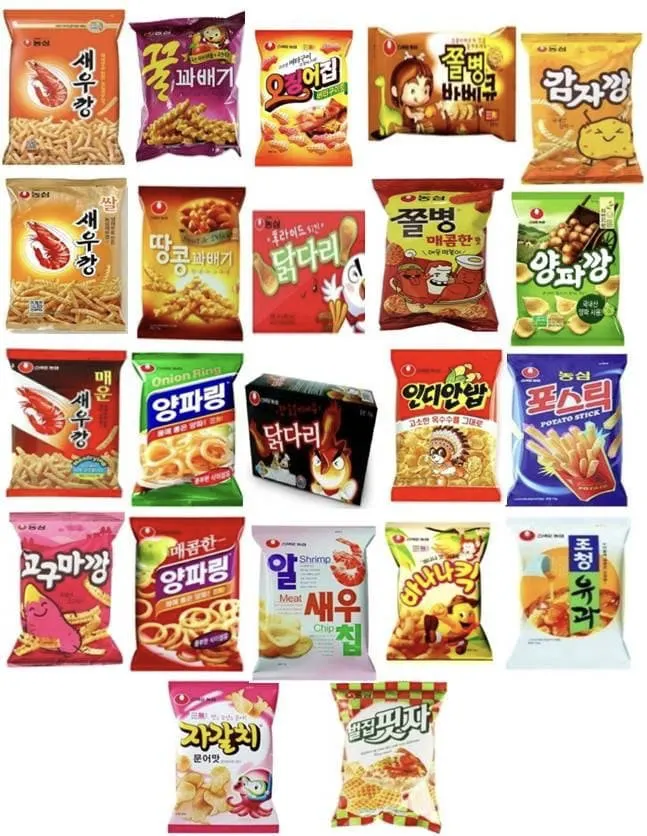
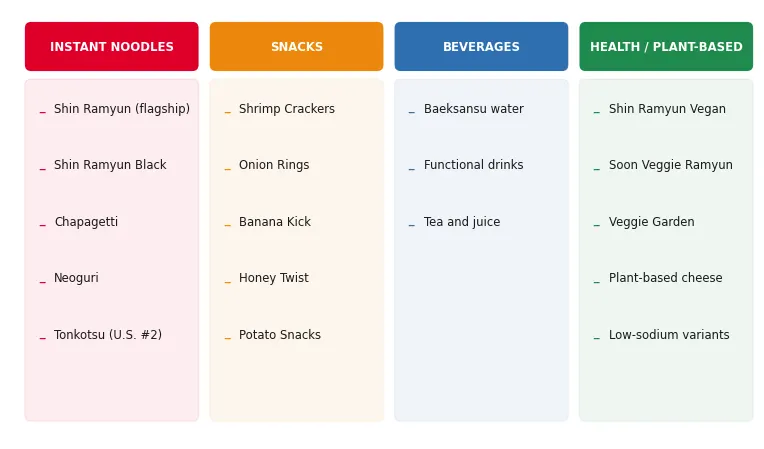
The portfolio spans four pillars. Instant noodles remain the core, led by Shin Ramyun and its premium and regional spin offs, with Tonkotsu now the second best seller in the United States.12 Snacks anchor a heritage category built on Shrimp Crackers. Beverages center on the Baeksansu premium water line. The newest pillar, health and plant based, is the strategic growth area.1518
Instant noodles: Shin Ramyun, Neoguri, Shin BlackPremium line: Chapagetti The BlackSnacks: Shrimp Crackers and the heritage range
Product images company-provided.
Figure 10. Portfolio overview across four pillars. Health and plant based is the designated growth pillar.
08
Innovation & Technology
Innovation runs on two tracks, product and operations. On product, the company combines air dried noodle formats for a healthier profile with fusion flavors tuned to local markets, supported by R&D led consumer research, surveys, and regional focus groups. On operations, Nongshim is extending artificial intelligence and IoT across its smart factories to raise efficiency and reduce defects.10
New business and food tech
The company is also investing beyond its core. Through the techUP+ accelerator and a food tech fund commitment of about USD 7.4 million with external venture partners, it is backing startups in smart farming and cultivated meat.16 It has signed smart farm export deals with the United Arab Emirates and Saudi Arabia to grow Korean strawberry varieties year round, a venture valued in the tens of millions of dollars.16 These moves diversify the business and hedge long term exposure to the noodle category.
09
Sustainability & ESG
Sustainability is becoming a condition of market access, especially in Europe, and the company's recent work is concrete rather than aspirational. Packaging is the clearest front. In October 2024 Nongshim moved two snack products to olefin based mono material packaging in place of multi layer composites, improving recyclability.21 In May 2025 it switched Dakdari snack printing from gravure to flexographic, the first use in Korea of fully water based flexographic printing, which cuts volatile organic compound emissions.21 In January 2025 it lightweighted the Welch's Soda 300 millilitre PET bottle from 27 to 24 grams, an estimated saving of about 1.7 tons of plastic a year.21 It also recycles used aseptic beverage cartons with Hansol Paper into recycled pulp material, and all domestic plants hold ISO 14001 certification.2117
On the social side, community programs and a Future Business Division established in 2024 support the wider agenda, and the plant based platform doubles as an environmental story, since meat alternatives carry a lower footprint than conventional protein.16
Note on legacy figures. The prior draft cited a specific factory emissions reduction and a meal donation total. Those could not be confirmed against current public disclosures and have been replaced above with verified packaging and certification initiatives. Confirm any headline emissions or donation figure against the latest Nongshim Sustainability Report before external use.
10
Risk Register
Risk
Exposure
Mitigation
Category concentration
High
Heavy reliance on instant noodles. Mitigate through snacks, beverages, plant based, and new business diversification.
Input cost volatility
High
Wheat and palm oil swings compress margin. Mitigate through premiumization, hedging, and procurement scale.
Competition, home and abroad
High
Samyang overtook Nongshim in overseas sales in 2024; Toyo Suisan and Nissin scale in the United States. Mitigate through capacity, premium lines, and culture led marketing.620
Trade and tariff policy
Medium
A 15 percent United States tariff on Korean noodles is already weighing on shipments. Mitigate through local production and market diversification.20
Health perception
Medium
Sodium and processed food scrutiny. Mitigate through low sodium and plant based ranges and transparent labeling.
ESG and packaging regulation
Rising
Tightening rules, notably in Europe. Mitigate through recyclable packaging and verified emissions reporting.17
11
SWOT Analysis
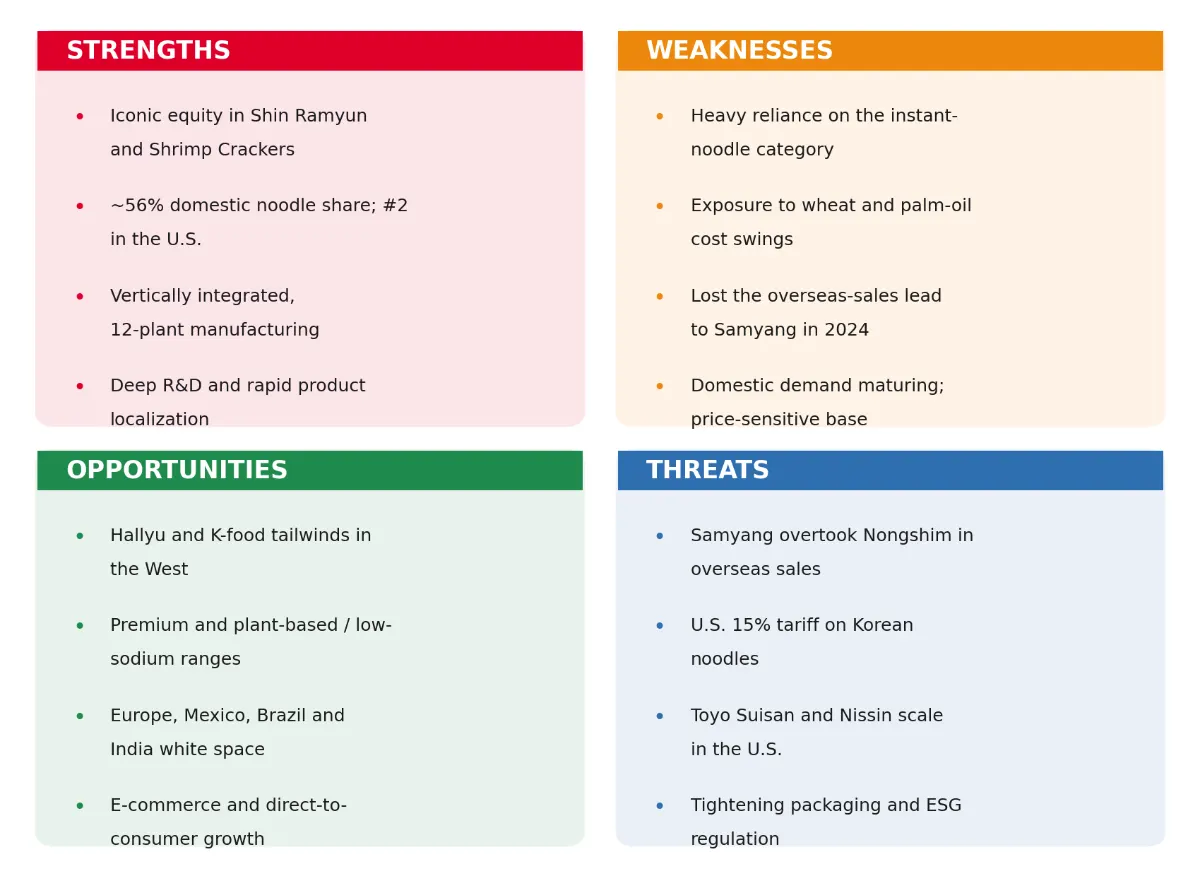
The SWOT below frames where the company is strong, where it is exposed, and where to act. The strategic thread is consistent. Strengths and opportunities both point outward, toward international markets and premium and health positioned ranges, while the most serious weaknesses and threats cluster around category concentration, input costs, and rising competition.
Figure 11. SWOT analysis. Sources for underlying claims are detailed in sections 3 to 10 and the reference list.
Strengths into opportunities
Iconic equity, deep R&D, and a multi country manufacturing base give the company the right to win abroad. The clearest conversion is to point that machine at Western premium and plant based demand.615
Weaknesses against threats
Category concentration and cost exposure become dangerous precisely when competitors like Samyang accelerate. Diversification and margin discipline are the defensive priorities.8
12
KPI Dashboard
Indicator
Latest
Reference period
Read
Consolidated revenue
KRW 3.51T
FY2025
Up 2.2% YoY12
Operating profit
KRW 183.9B
FY2025
Up 12.8% YoY1
Korea noodle share
~56%
2024
Dominant, mature5
United States position
#2
2023 to 2025
~25.5% share, target #16
Overseas sales ratio
~37%
FY2024
Target 61% by 20301920
Korean ramyun exports
US$1.4B
to Nov 2025
National record8
Global category size
~US$63B
2025
~7% CAGR to 20297
North America capacity
850M units
since 2022
Second plant online10
13
Client Priorities & Where We Add Value
These are the client's stated priorities for 2026, paired with where our team can contribute. Use this as the starting point for scoping and ideas.
Client priority
Where our team adds value
Win share in the United States. Scale Tonkotsu and Shin Black and close the gap to Toyo Suisan.61012
Brand building and retail activation for the United States, premium positioning for Shin Black, and creative that resonates with American consumers.
Stand up Europe properly. Convert new distribution into branded demand via the European subsidiary and Busan hub.1112
Market entry campaigns and localized creative across the United Kingdom, Germany, France, and Southern Europe.
Protect margin through premium and health. Push Shin Black, Shin Gold, low sodium, and plant based ranges.818
Repositioning away from the cheap food image, premium and wellness storytelling, and packaging and message testing.
Make culture led marketing a standing capability. Build on aespa and the 2025 entertainment tie ins.813
This is our sweet spot. Artist and entertainment partnerships, social first content, and culturally fluent campaigns.
Diversify beyond noodles. Food tech, smart farm, and plant based investment.16
Brand architecture and launch support for Veggie Garden and new ventures, plus narrative for the wellness platform.
Get ESG audit ready. Confirm packaging and emissions metrics for European requirements.1721
Sustainability communications that are credible and claim safe, aligned to European green claim rules.
A
Account Quick Reference
A one page snapshot for fast onboarding. Keep this handy when scoping work or briefing collaborators.
Item
Detail
Who they are
Nongshim Co., Ltd., founded 1965, South Korea's largest instant noodle and snack maker, present in more than 100 countries.9
Flagship brands
Shin Ramyun and Shin Ramyun Black, Chapagetti, Neoguri, Tonkotsu, Shrimp Crackers, Baeksansu water, and the Veggie Garden plant based range.1518
Tagline and voice
Lovely Life Lovely Food. Confident, warm, food forward, and increasingly wellness oriented.17
Target audiences
Global K-food enthusiasts, younger Hallyu driven consumers, and a growing health conscious segment.
Main competitors
Toyo Suisan and Nissin in the United States; Samyang, which overtook Nongshim in overseas sales in 2024, and Ottogi at home.620
Biggest opportunity
Culture led marketing and premium and health positioning to drive international growth, especially in the United States and Europe.813
Key watch-items
The 15 percent United States tariff on Korean noodles, input cost volatility, and the Samyang challenge.20
Brand colors
Nongshim Red DF0029 and accent Orange EC870C.17
B
Methodology & References
This brief was prepared from public sources for internal team use. Financial figures use FY2025 actuals from market data providers and company reporting. Market sizing draws on independent research houses, which differ in absolute numbers, so ranges are given where sources diverge. Market shares are the latest available estimates and should be treated as directional. Photography, the global footprint map, and product images are client-provided assets. The overseas sales chart and the market infographic were rebuilt as original visualizations from the cited underlying data. All external text is paraphrased and no copyrighted text is reproduced. Figures flagged for verification should be reconfirmed before any client facing use.
The Korea Herald, Nongshim Veggie Garden expansion and Forest Kitchen vegan restaurant. koreaherald.com
Green Queen, Nongshim food tech investment, cultivated meat, and smart farms, 2023. greenqueen.com.hk
Nongshim Corporate Identity, eng.nongshim.com/about/ci, with brand color references from public CI summaries. eng.nongshim.com/about/ci
The Vegan Society and product certifications; The Ramen Rater, vegan Shin and Soon Veggie Ramyun. theramenrater.com
The Asia Business Daily, citing DS Investment & Securities, Nongshim overseas sales ratio about 37 percent in 2024 with a 61 percent target by 2030. asiae.co.kr
Global News Top and AInvest, Samyang overtakes Nongshim in overseas sales; Busan export factory KRW 191.8 billion; United States 15 percent noodle tariff; new growth markets, 2026. globalnewstop.com
The Asia Business Daily, Shin Ramyun 40th anniversary, KRW 1.34 trillion in 2024 sales and 42.5 billion cumulative units. asiae.co.kr
Prepared as an internal strategic review. Figures are best available estimates as of June 2026 and are subject to confirmation against audited filings and the latest sustainability report.